Shopping Cart

To mark the 16th anniversary of the manufactory, Moritz Grossmann presents the limited-edition ENAMEL ROMAN Vintage

NOVEMBER 13 2024    |    Novelties

Black is the absence of light. This is the physical definition of a colour that is synonymous with classicism and elegance. At Moritz Grossmann, black is used to form stylish contrasts and also serves as a testament to the highest standards of craftsmanship. The limited-edition ENAMEL ROMAN Vintage, for example, has an enamel dial whose manufacture presents multiple challenges. With this, Moritz Grossmann has chosen the occasion of its 16th birthday to once again shine the spotlight on the expertise of the ateliers and workshops in Glashütte.

Tradition requires renewal, otherwise it remains stagnant in the past and cannot survive. This is an approach that Moritz Grossmann has embodied since 2008: the manufactory opened 16 years ago as a tribute to one of the most exceptional personalities in the history of watchmaking in Glashütte. Moritz Grossmann was an innovative watchmaker and, with the founding of the German Watchmaking School in Glashütte, influenced a generation of artisans.

His values and vision now live on in the Moritz Grossmann manufactory, which crafts a small but exquisite collection of sophisticated watches that always remain true to the standards of the man who gave the manufactory its name. Characteristics of these timepieces include exclusive manufactory movements with innovative details that are designed, made and finely decorated in-house in the company’s own workshops. The highest of standards also come into play when finishing the watches, as impressively demonstrated by the special model marking the 16th anniversary of the manufactory.
 

ENAMEL ROMAN Vintage: contemporary craftsmanship honouring the 16th anniversary of the manufactory
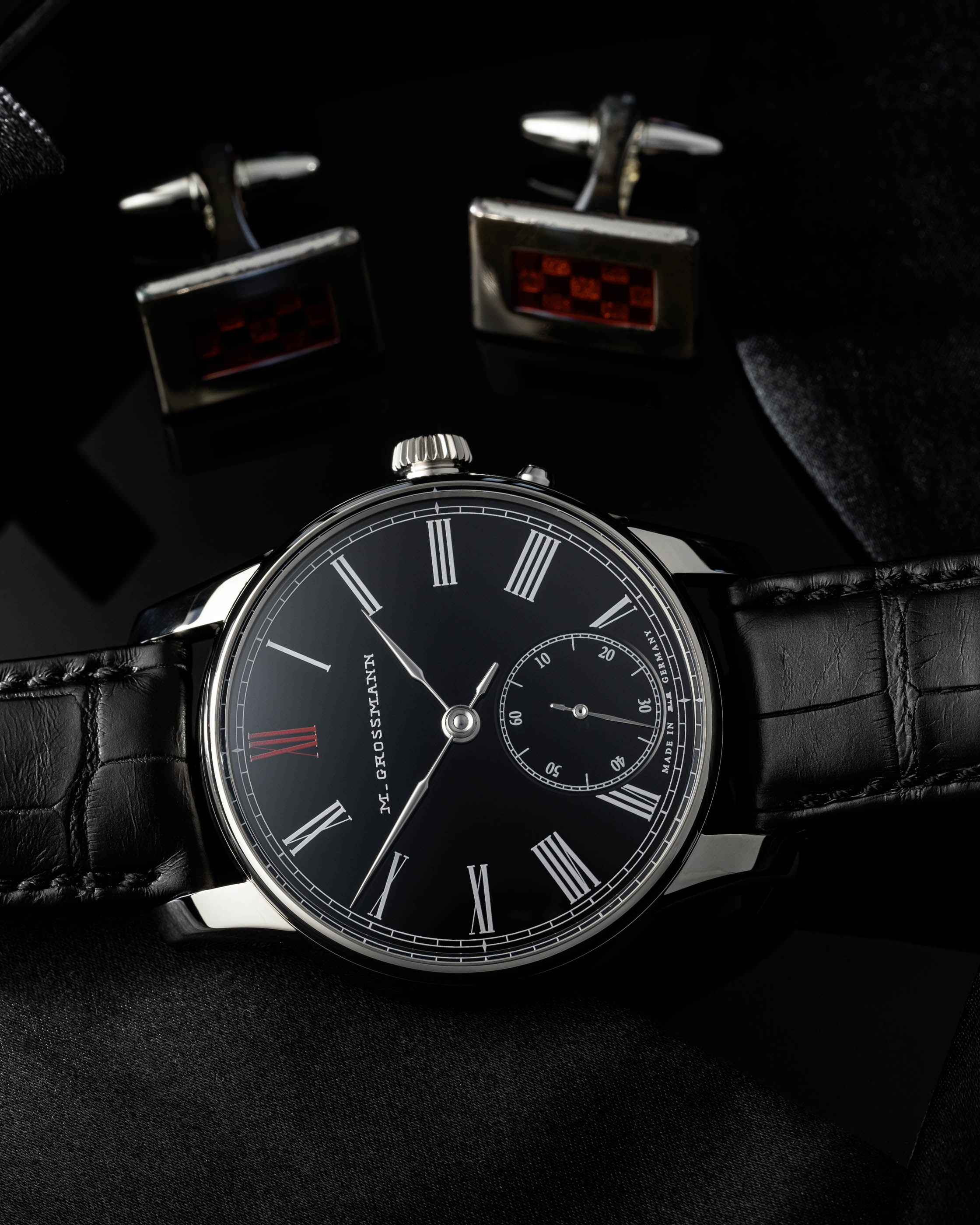
The ENAMEL ROMAN Vintage, which is limited to eight pieces, serves as a contemporary interpretation of the company's philosophy: its theme is the contrast between black, white and red, which brings the art of watchmaking as cultivated by Moritz Grossmann into the modern age.

The deep, perfect shade found on the dial draws the eye. It is rooted in the technique of enamelling, an ancient craft. The oldest known enamels date from the centuries before Christ, when artistic enamels were already being used by people in East Asia and the ancient Egyptians. Later, the art of enamelling experienced a heyday in Byzantium and also in Europe. Even early on, people marvelled at enamel because of its colourfulness, beauty and radiance, and later it was prized for its characteristics, including durability, the fact that it does not age, is smooth and has a fine yet subtle sheen.

As pocket watches started to be made, enamel gained in importance when it came to the production of dials. Its use spread to Saxony, where the art of enamelling was cultivated in gold and silversmithing. In the 17th and 18th centuries, for example, Georg Friedrich Dinglinger, a brother of the well-known Dresden court goldsmith Melchoir Dinglinger, produced some impressive works. Both artists worked under the patronage of Augustus the Strong, Elector of Saxony and King of Poland. Works of art from their workshops can today be admired at the Grünes Gewölbe in Dresden.
 

The art of enamelled dials
With the renaissance of the mechanical watch, the enamel dial has gained admirers once again. It is treasured not only for its beauty, but also because people are now aware of what is involved in its creation, a complex process that requires much skill. Enamel is formed from glass and other additives. The enamel granules are pulverised, with metal oxides or ceramic pigments lending them their colour. The enamel is then sieved while dry or applied to a dial blank as part of a blend of enamel powder, water and glue. Following the first round of firing and cooling, enamel powder is once again applied to the front and it is fired again. This process of firing, applying enamel powder and firing again is repeated several times.

Layer by layer, this creates a uniform, shiny surface that can be printed with numerals or indices following the final firing. The finished dial is impressively durable: there are no time limits on enamel and it can last for a thousand years.
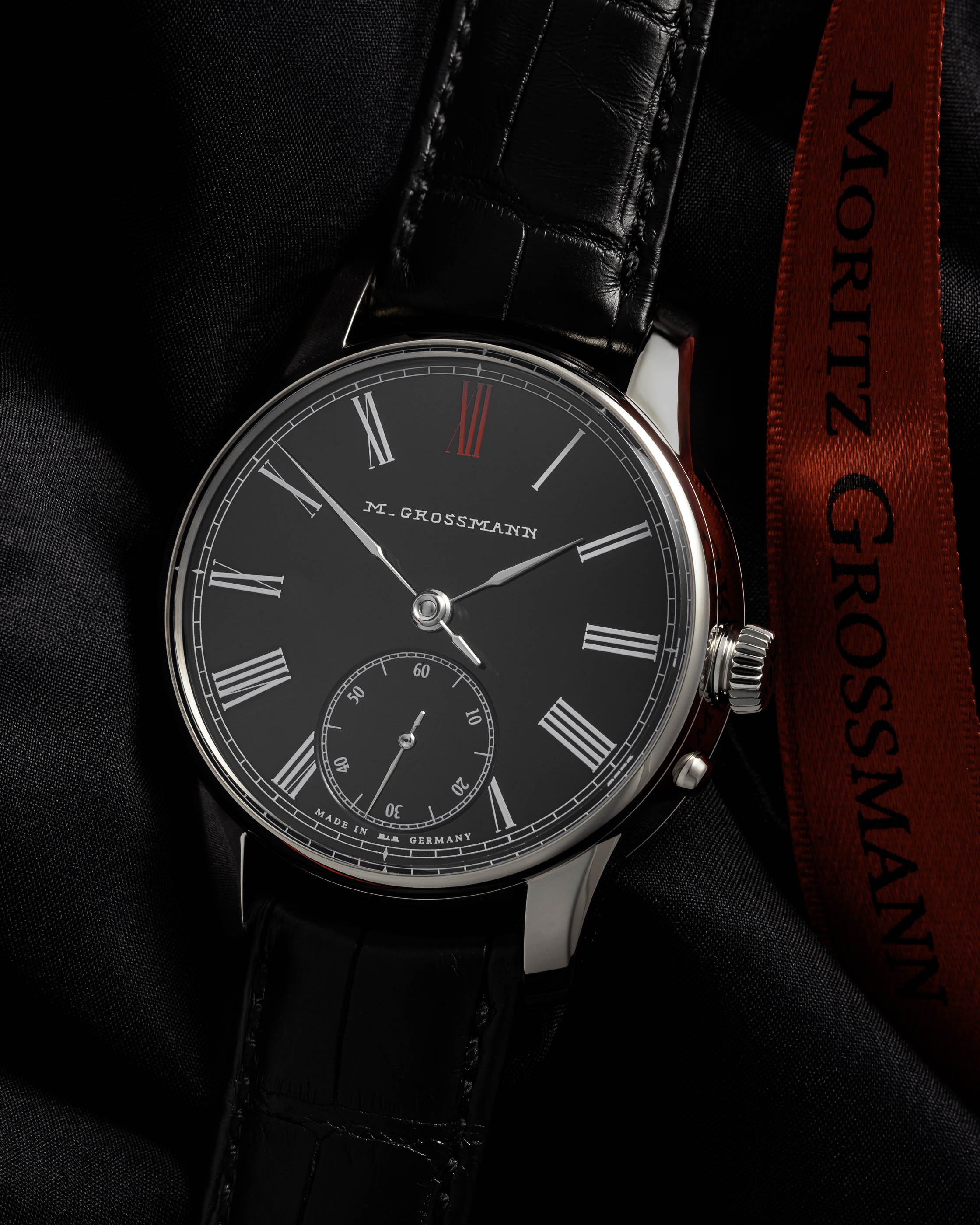
 

Approximately 90 steps are involved in creating a single dial for Moritz Grossmann
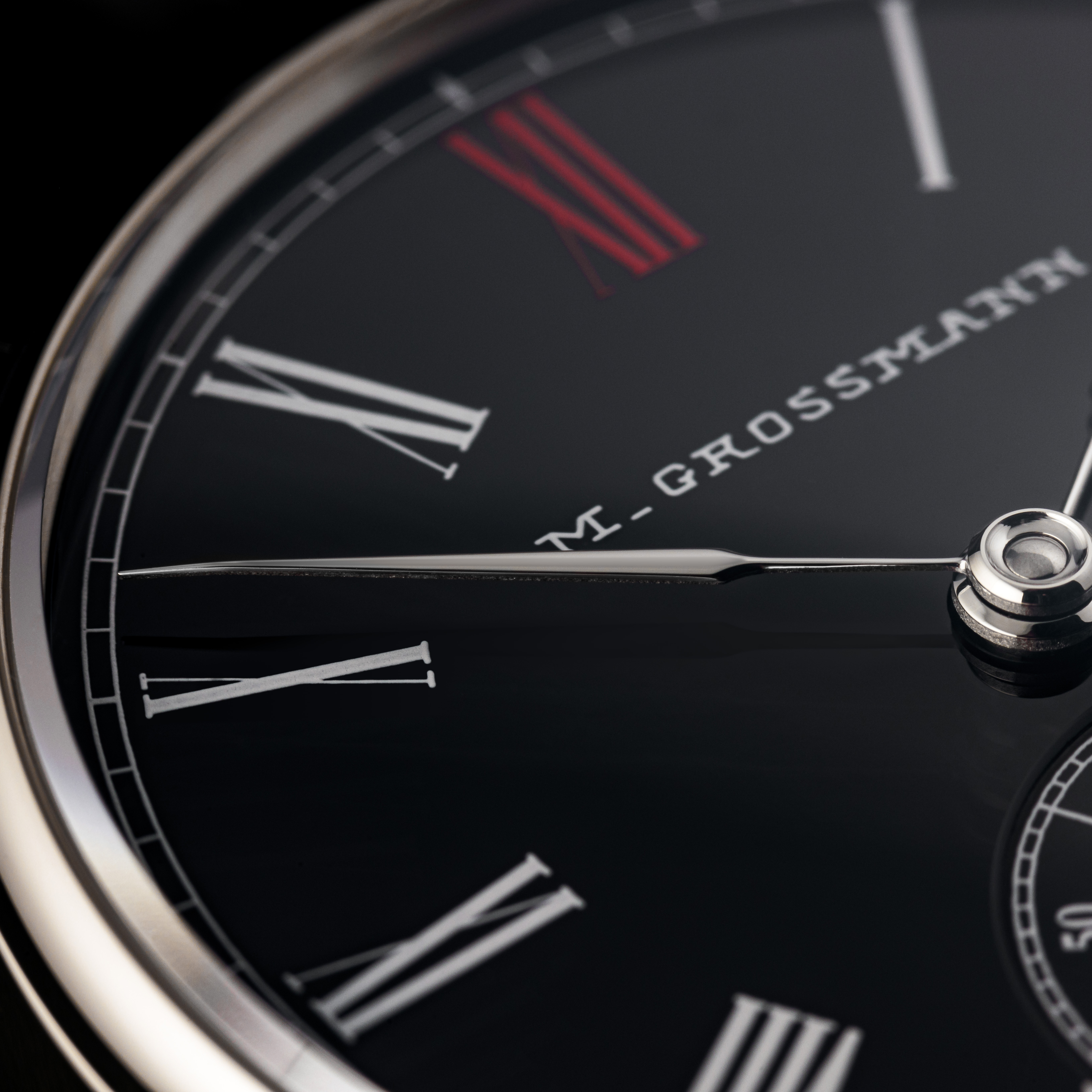
This is the tradition that gave rise to the enamel dial on the ENAMEL ROMAN Vintage by Moritz Grossmann. And this technique was not just used for the colour black, but the numerals, scales and lettering, such as the historic ‘M. Grossmann’ logo, are also made from enamel. These are applied using pad printing and then fired.

In all, around 90 steps are required to complete a single dial. These take several days to complete and at every single stage, there is a risk that the enamel will crack on firing, bubbles will form or the surface will flake. Only a dial that is perfect in every single way will eventually be used in a Moritz Grossmann watch. In such watches, it serves as the canvas for time, above which polished steel hands circle with their finely pointed tips.

The deep black of the dial is a reminder of the power of colour. The perfectly smooth surface is so still that you feel you could dive straight into it. This effect is underpinned by the slimline, finely drawn Roman numerals that contrast sharply with their clear white and the red XII. A simple case in white gold provides the perfect backdrop, with the sides merging seamlessly into the case horns. The transparent case back offers an unrestricted view of a movement that is perfection itself, matching the finish in every detail.
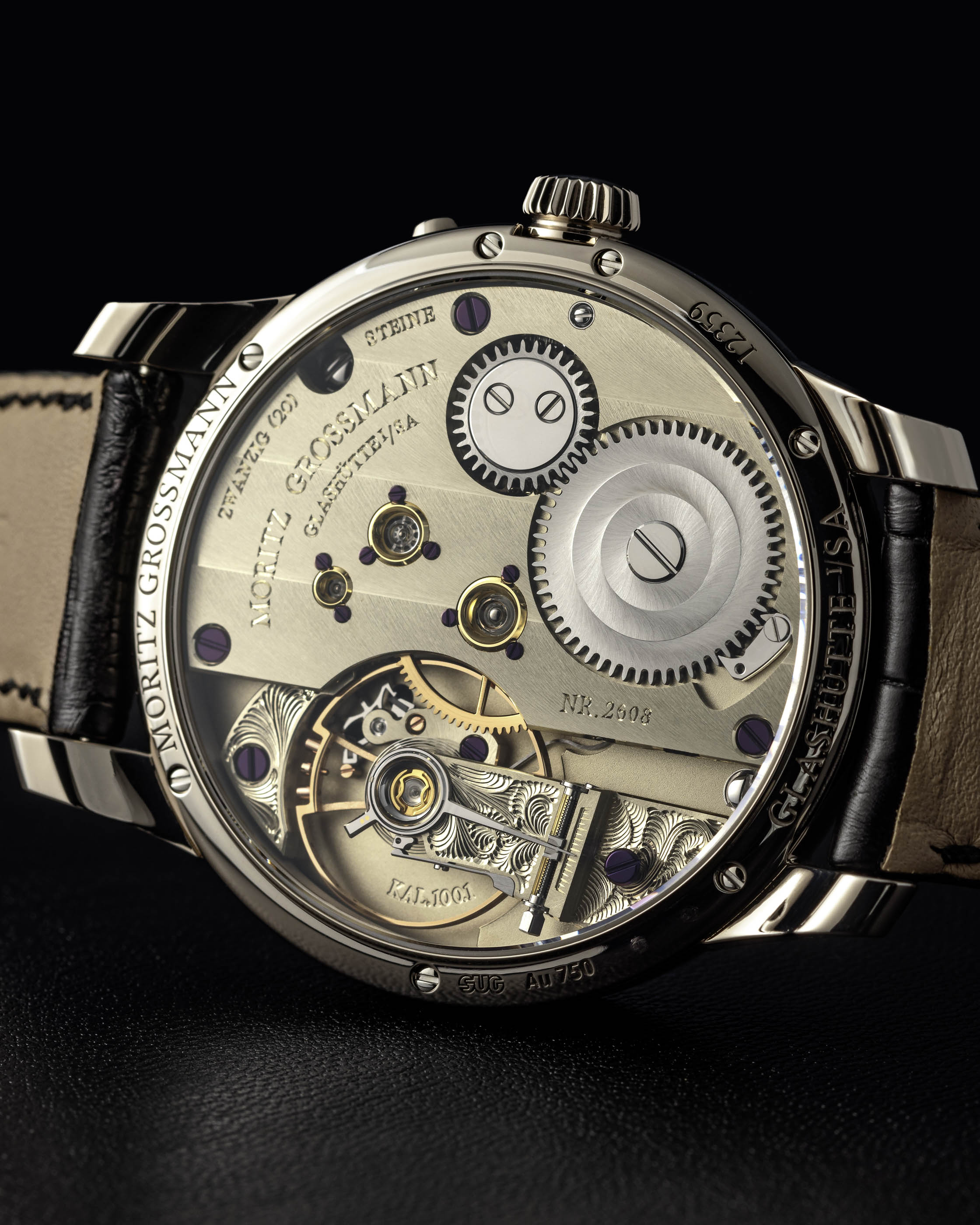
 

The art of watchmaking from Glashütte: the calibre 100.1
The inside of the ENAMEL ROMAN Vintage is home to the calibre 100.1, a pillar movement with well-proportioned components made from untreated German silver in a high-quality finish. The characteristic 2/3 plate with broad, horizontal ribbing has been signed by a hand engraving. It has a curved cut-out that reveals the distinctive Grossmann balance, held by a stepped, hand-engraved balance cock with the typical fine micrometer screw.

Another special feature of the manufactory movement is the perfected hand setting mechanism, which eliminates two potential problem areas: avoiding the ingress of foreign particles during the adjustment process and altering the hands unintentionally when pushing the crown back into place.

With a short pull on the winding crown, the mechanism switches to hand setting and stops the movement at the same time. The crown immediately returns to its original position, where the hands can now be precisely adjusted. The movement is then restarted using a pusher situated below the winding crown. This simultaneously resets the mechanism to its winding function.
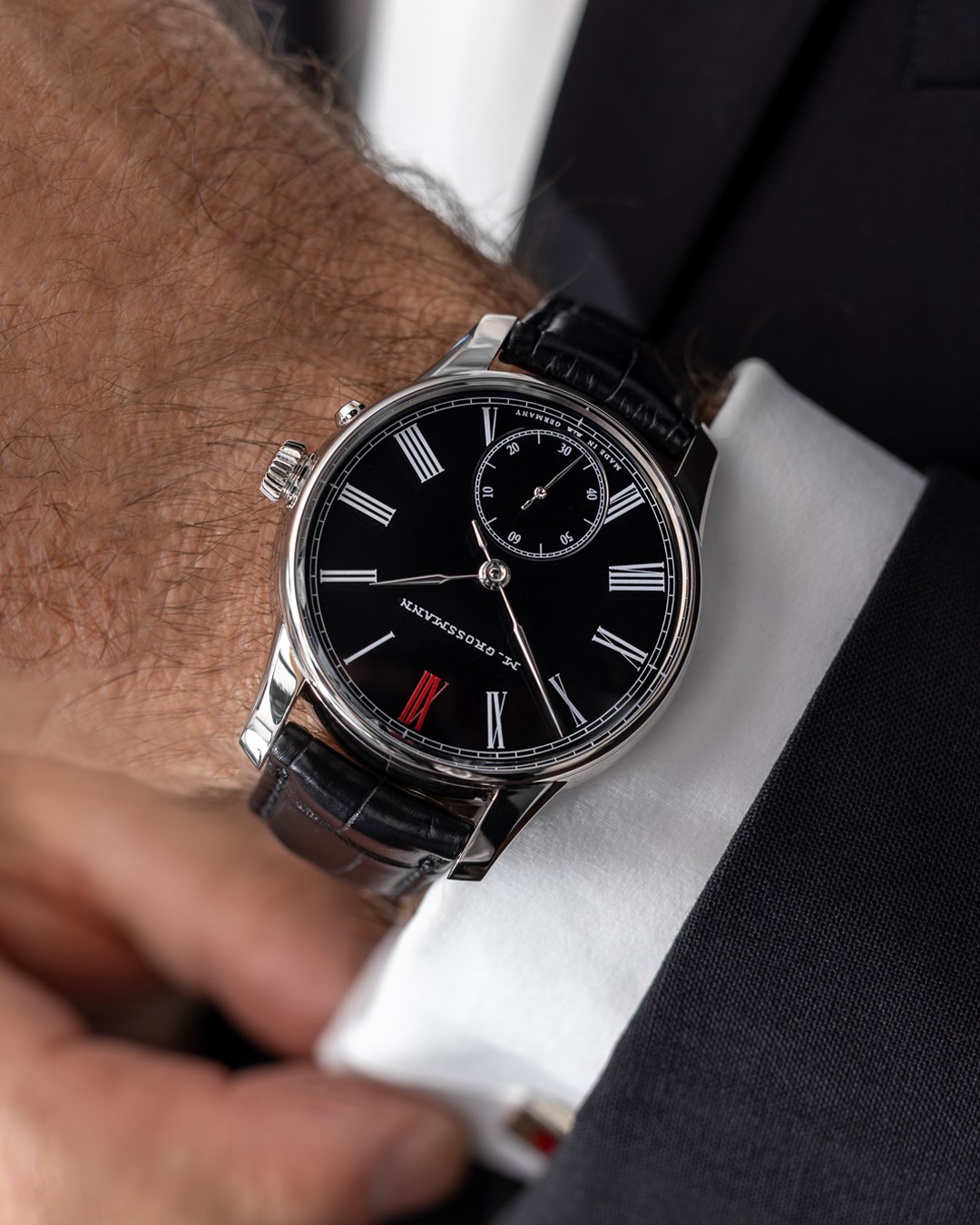
 

Exclusive special edition
The ENAMEL ROMAN Vintage in honour of the 16th anniversary of the manufactory has a case in white gold, worn on a black alligator leather strap. This special model is limited to eight pieces.
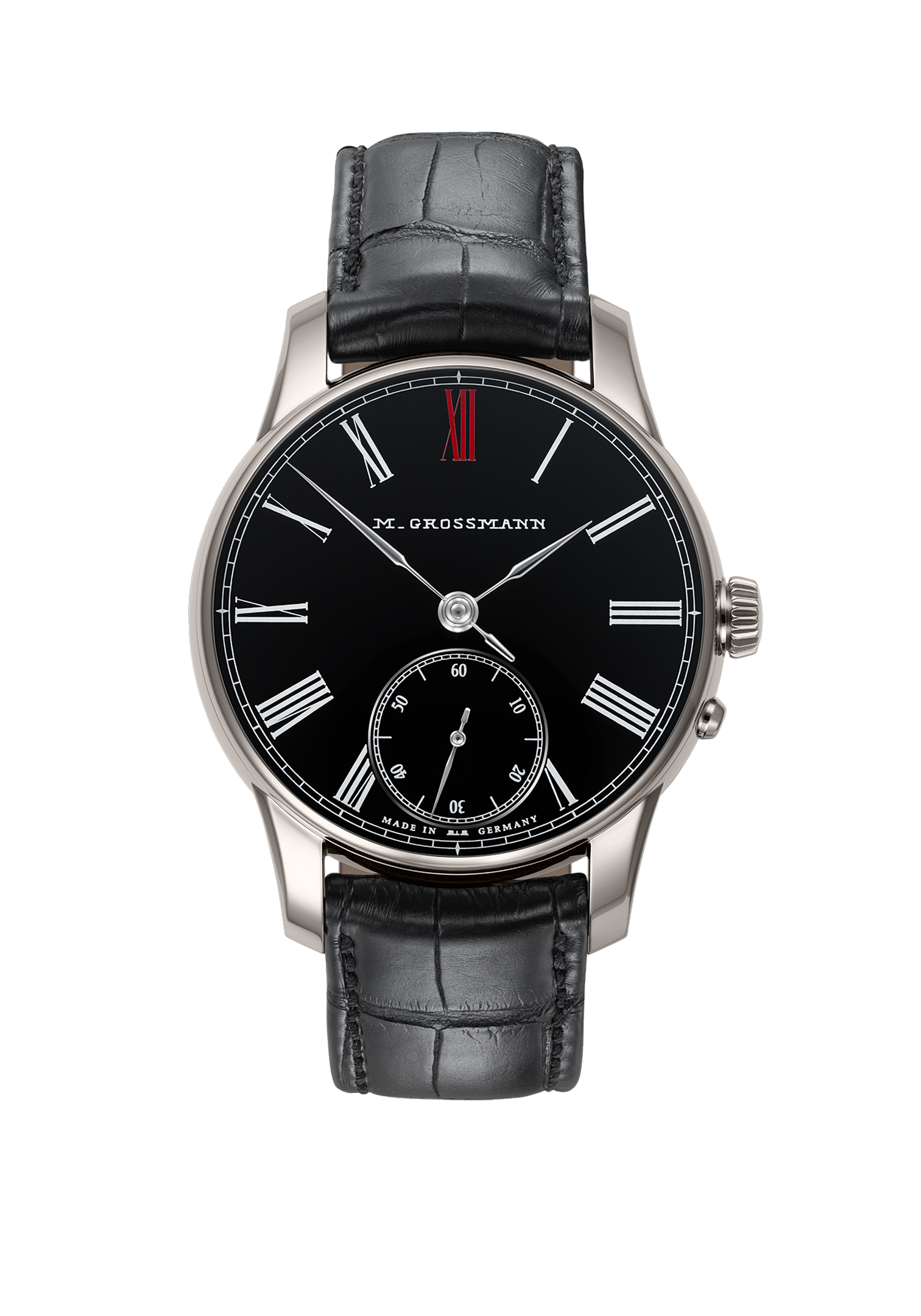
 

Enamel Roman Vintage

Technical Data


Version   Limited Edition of 8 pieces
Reference   MG-003717
     
Movement   Manufactory calibre 100.1, manual winding, regulated in five positions
No. of parts   198
Jewels   20 jewels, of which 3 in screwed gold chatons
Escapement   Lever escapement
Oscillator   Shock-resistant Grossmann balance with 4 inertia screws and 2 poising screws, Nivarox 1 balance spring with No. 80 Breguet terminal curve, Gustav Gerstenberger geometry
Balance Diameter   14.2 mm, frequency 18,000 semi-oscillations per hour
Power reserve   42 hours when fully wound
Functions   Hours and minutes, subsidiary seconds with stop second, Grossmann manual winder with pusher
Special features   Grossmann balance; hand setting override and start of movement with lateral pusher; space-saving modified Glashütte stopwork with backlash; adjustment with Grossmann micrometer screw on cantilevered balance cock; pillar movement with 2/3 plate and pillars made of untreated German silver; hand-engraved 2/3 plate, balance cock and escape-wheel cock hand-engraved; broad horizontal Glashütte ribbing; 3-band snailing on the ratchet wheel; raised gold chatons with pan-head screws; separately removable clutch winding mechanism; stop seconds for hand setting
Operating elements   Crown in 750/000 gold , to wind the watch and set the time, pusher in 750/000 gold to start the movement
Case dimensions   Diameter: 41.0 mm, height: 11.35 mm
Movement dimensions   Diameter: 36.4 mm, height: 5.0 mm
Case   Three-part, precious metal
Dial   Enamel, Roman numerals in white, XII in red
Hands   Manually crafted, polished steel
Crystal/display back   Sapphire crystal, antireflective coating on one side
Strap   Hand-stitched alligator leather with prong buckle in precious metal


Related Articles

MAY 20 2026    |    Novelties

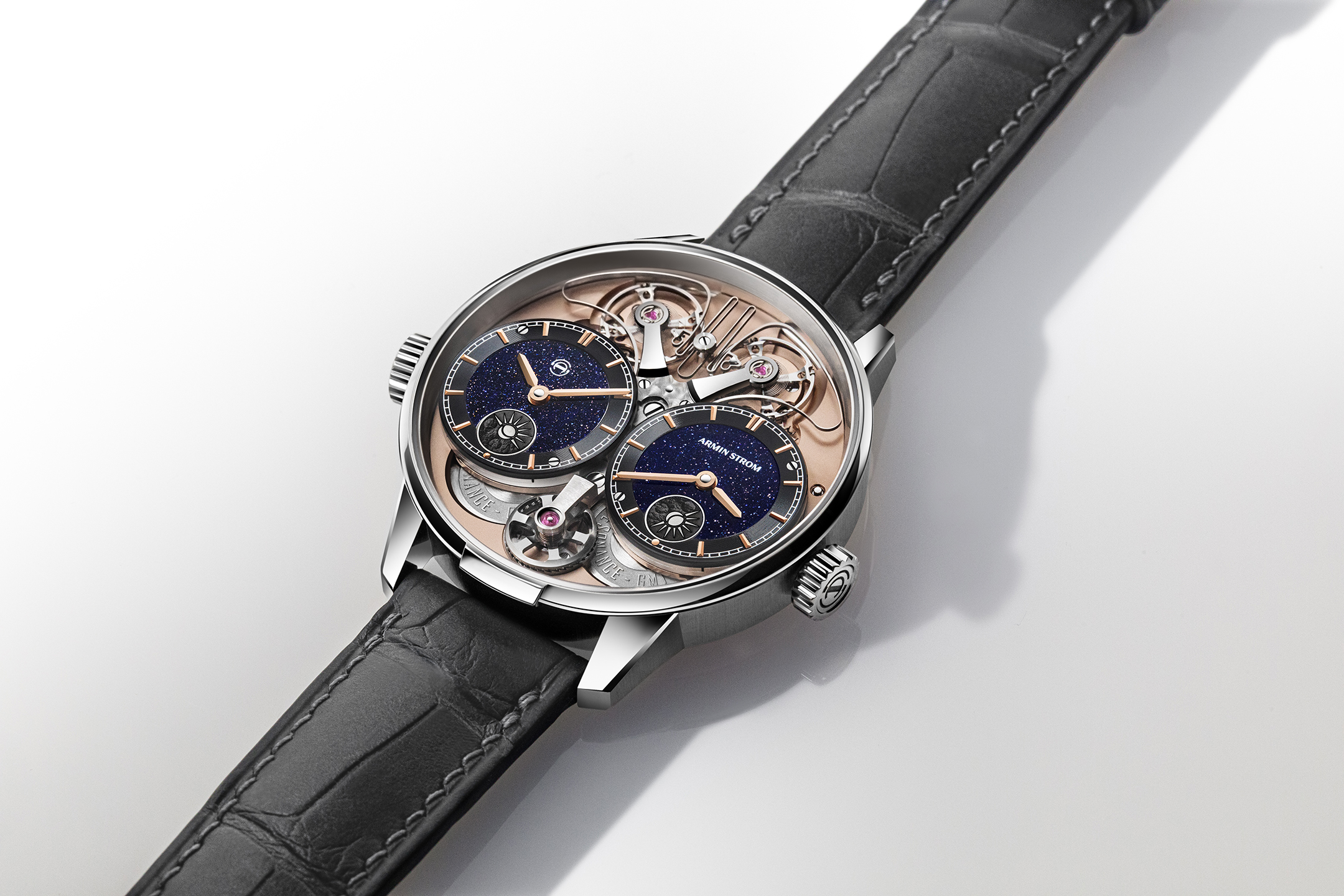
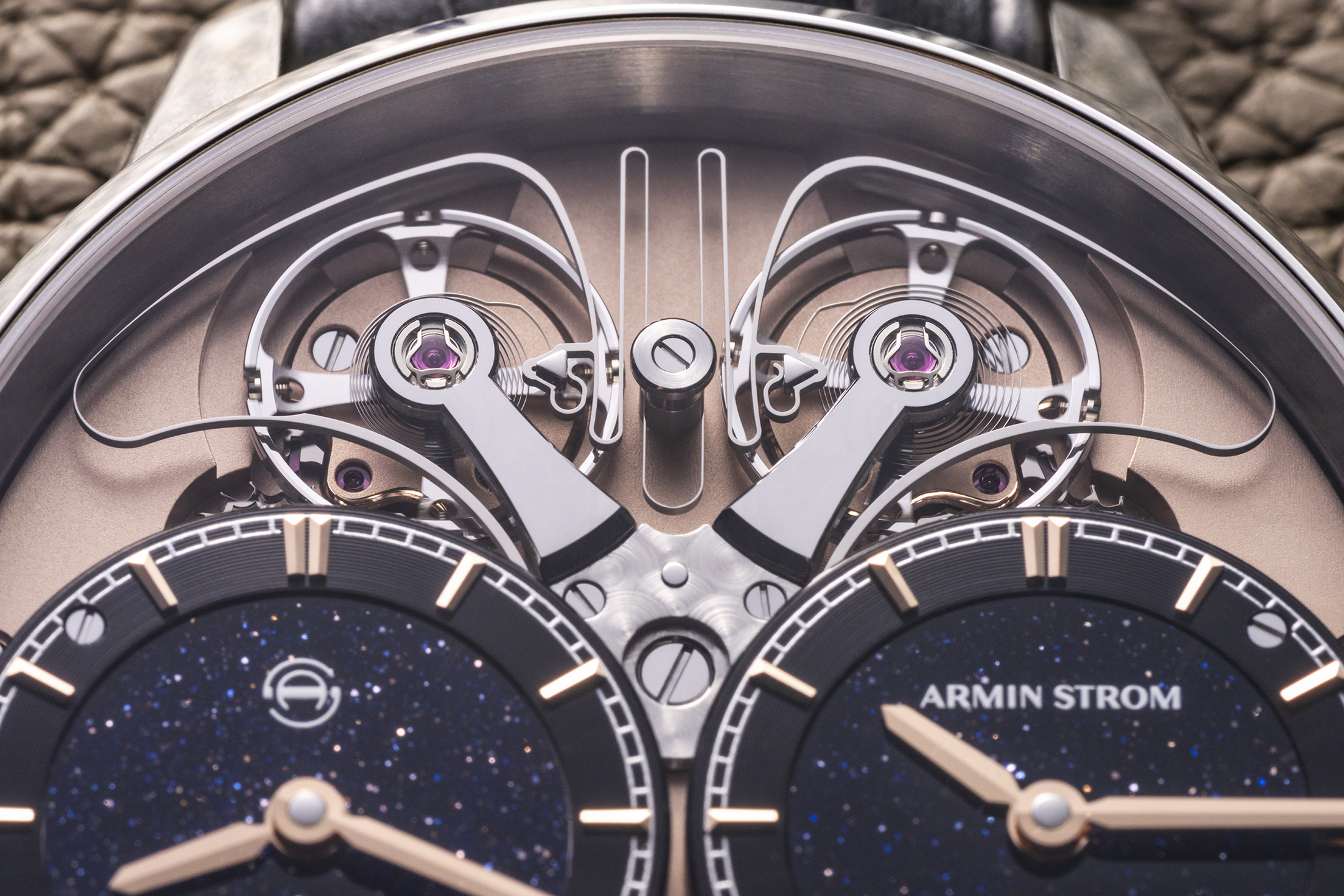
Celestial Contrast: Armin Strom Dual Time GMT Resonance Aventurine

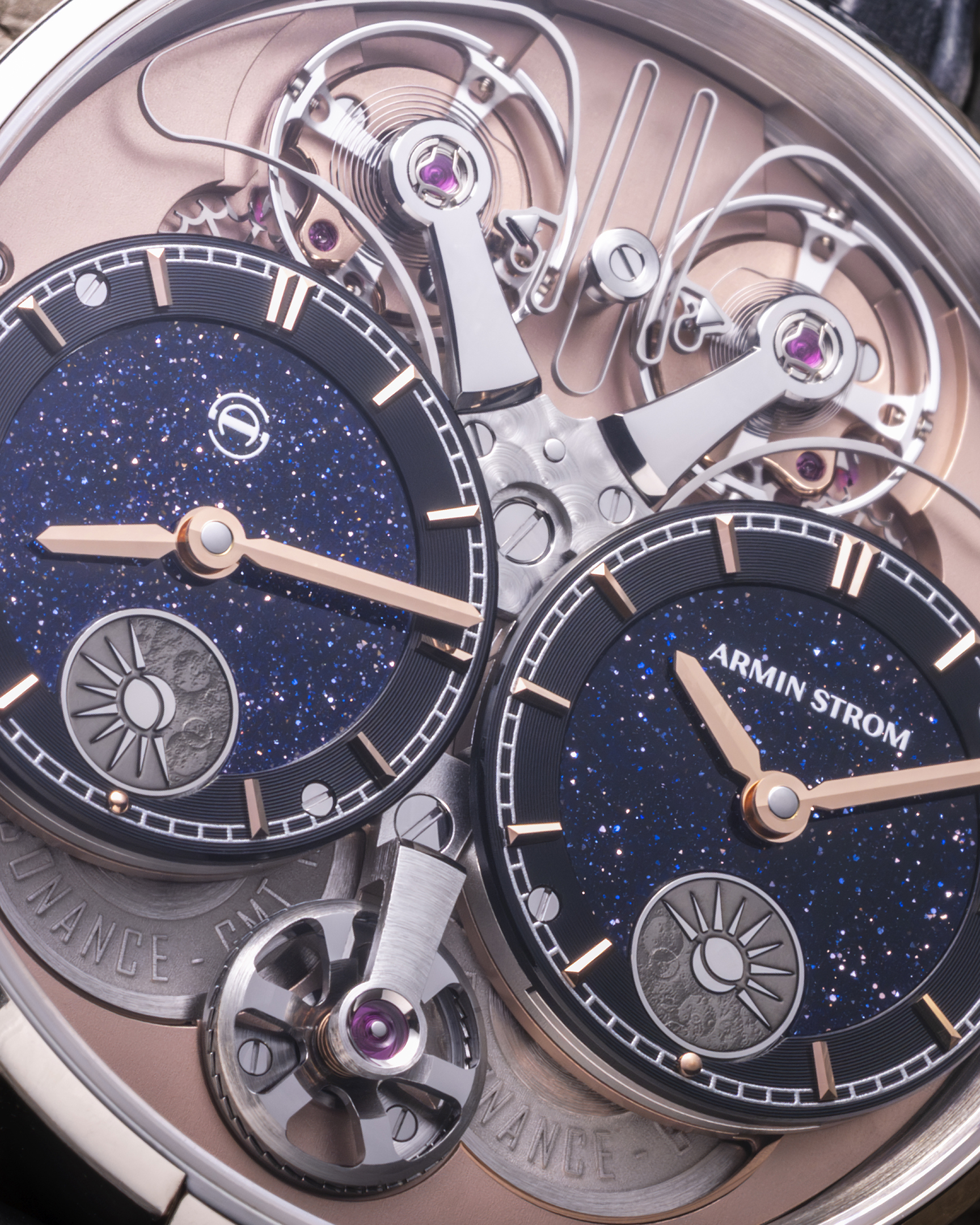
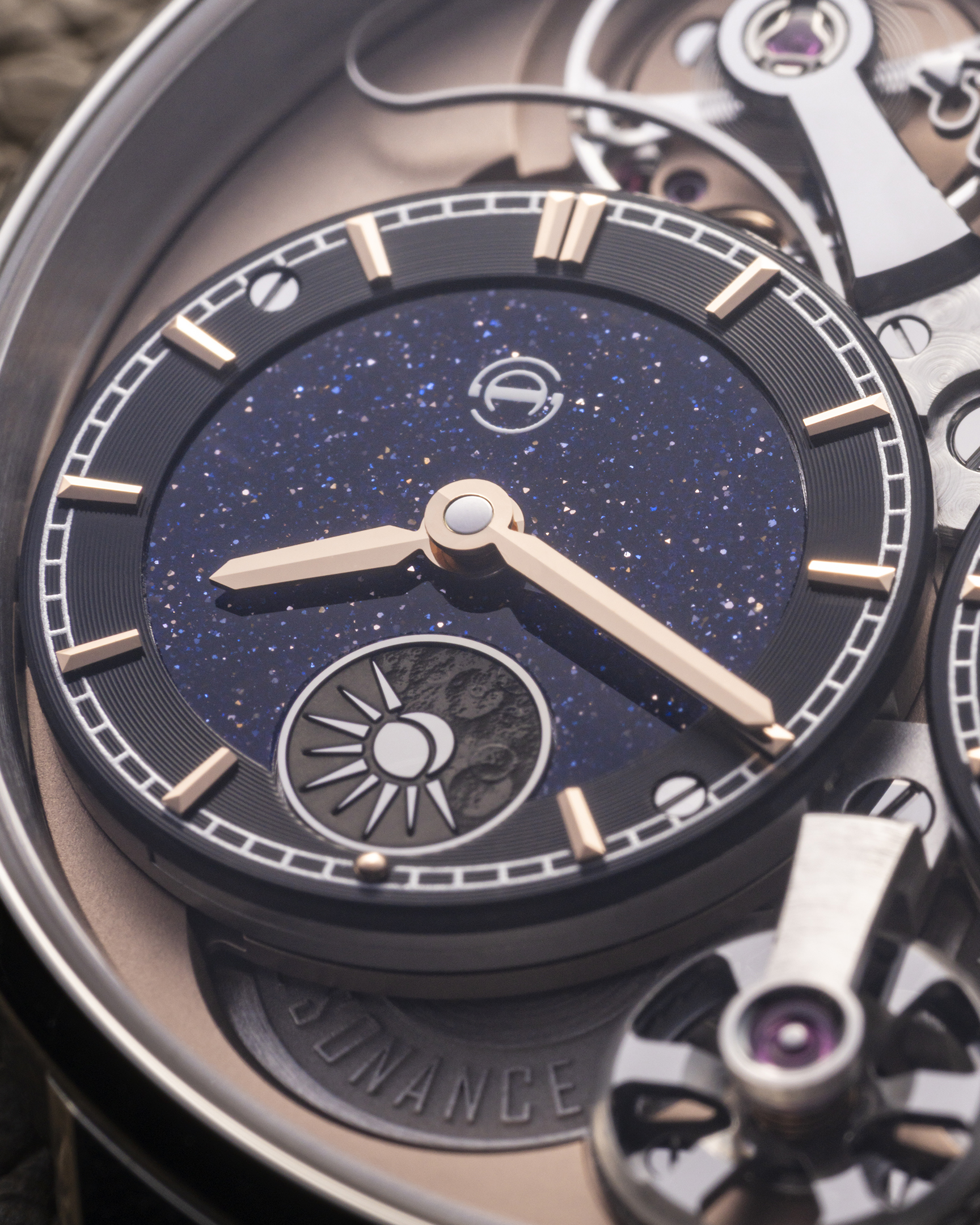
Armin Strom presents a new interpretation of its Dual Time GMT Resonance, distinguished by a dial crafted from aventurine—a material that captures the richness and mystery of a star-filled sky. Formed through a meticulous process that blends centuries-old glassmaking with modern precision, aventurine reveals a surface alive with light. The result is a dial that evokes a night sky in motion, creating a refined contrast with the architectural symmetry of the resonance movement. This celestial texture is enhanced by the warm tones of the movement: the rose gold-coloured mainplate adds depth beneath the dial-side display, while rose gold-coloured hands and applied indexes introduce clarity and visual identity. Together, these elements create a balanced interplay between cool luminosity and warm mechanical presence. Housed in a 39 mm stainless steel case and paired with a dark grey alligator strap, the Aventurine edition offers a contemporary and restrained frame, allowing the dial's dimension and the movement's symmetry to take centre stage.

Resonance Across Time Zones
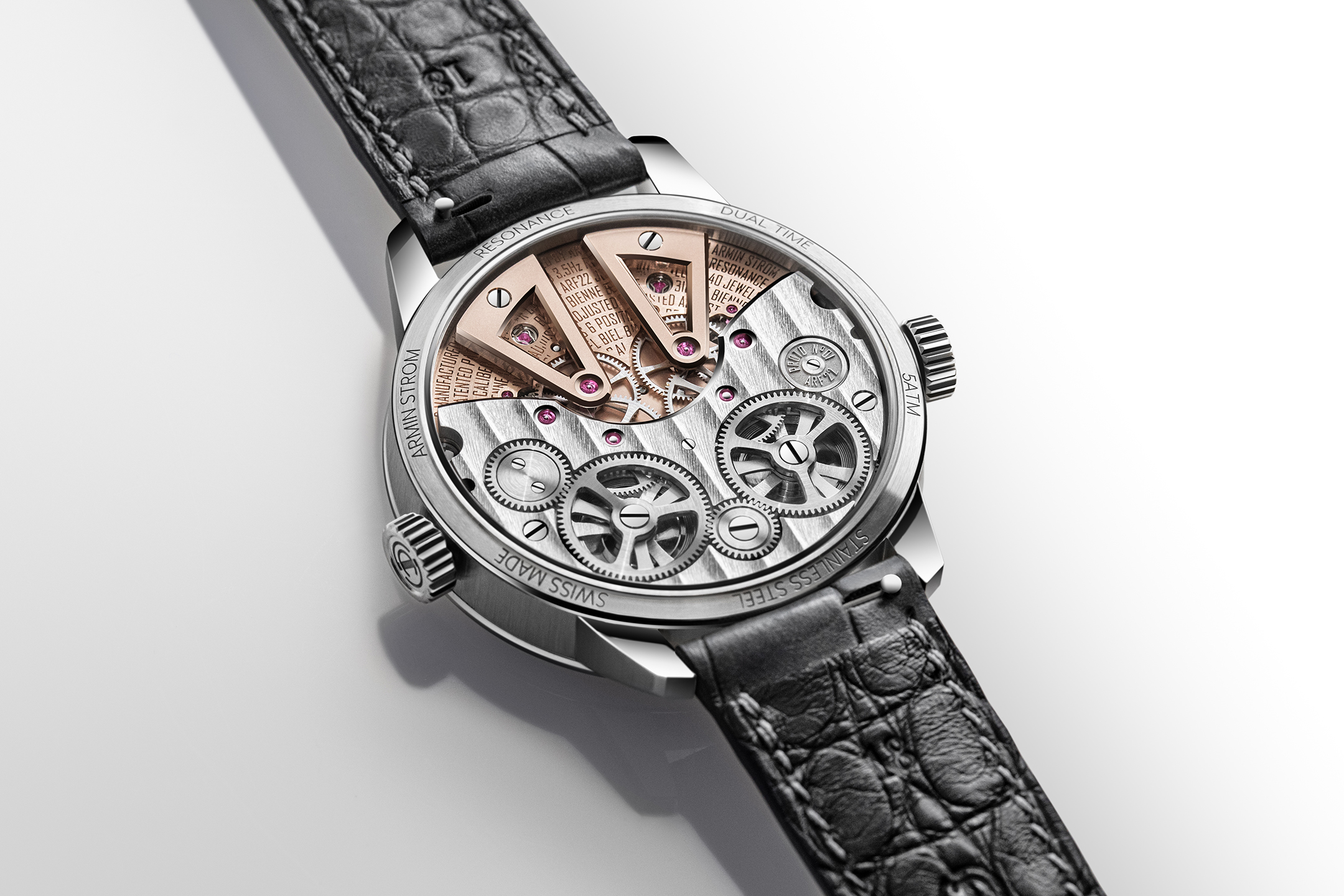
Powering the watch is the manual-winding manufacture calibre ARF22, entirely designed, developed and produced in-house. Its patented resonance clutch—a signature Armin Strom innovation—synchronises two independent regulating systems, allowing both balance wheels to oscillate in perfect harmony. This constant interaction elevates chronometric stability, transforming a rare physical phenomenon into a practical advantage. Each time zone features its own hours, minutes and day/night indicator, offering intuitive functionality for travellers. Operating at 3.5 Hz (25,200 vph) with a 42-hour power reserve, the ARF22 unites scientific ingenuity with everyday usability.

Finishing in Depth
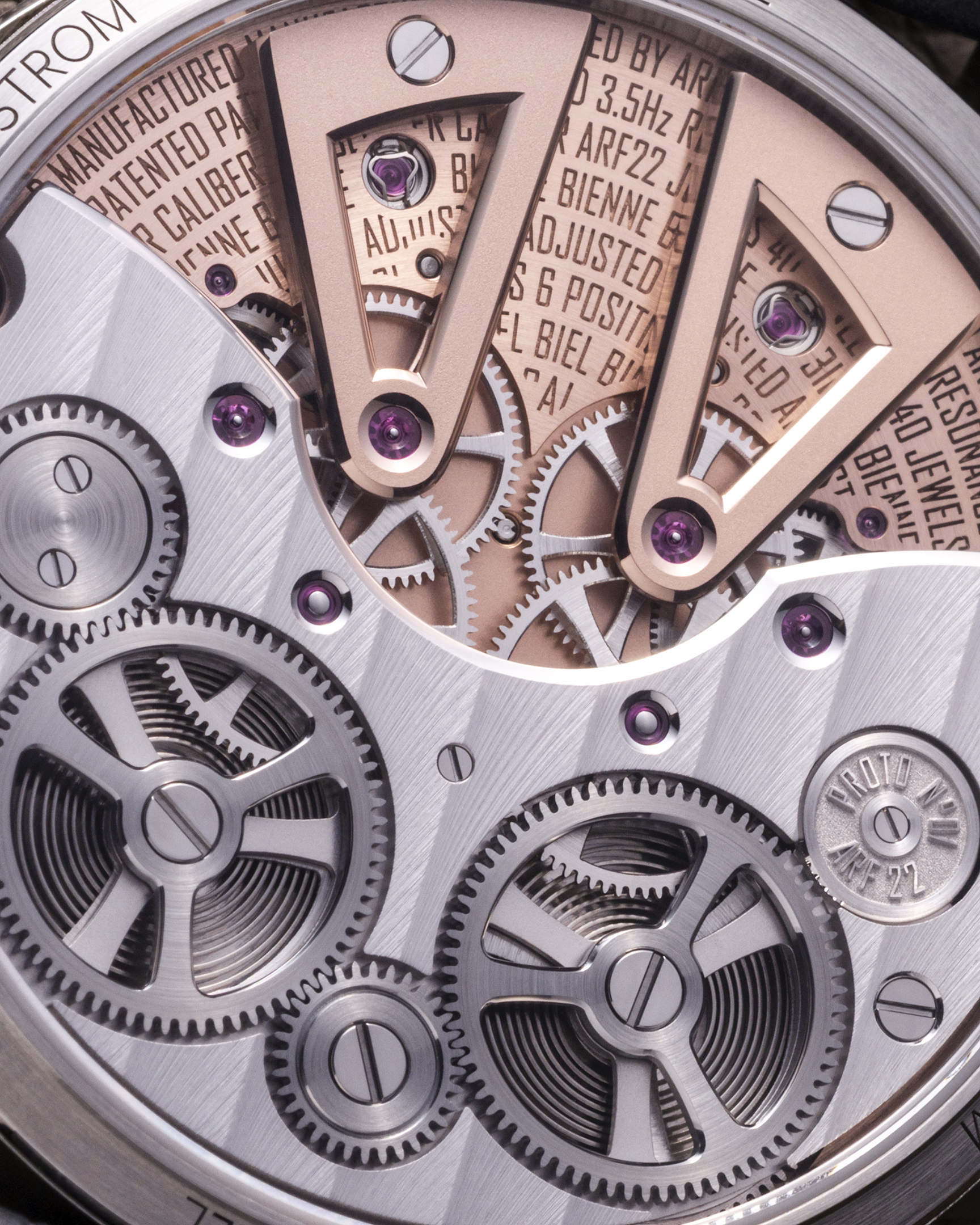
Visible through sapphire crystals on both sides, the movement reveals Armin Strom's signature open-worked architecture and hand-finishing. The rose gold-coloured mainplate establishes a warm, luminous foundation on the dial side, while matching gear-train bridges on the reverse side echo this tone, creating a cohesive visual language. This harmony of colour and structure accentuates depth and contrast, reinforcing the three-dimensional expression of the calibre and the brand's commitment to the Science of Movement. On the dial side, the mirror-polished balance bridge, finished with hand-bevelled edges, stands out as a focal point, its steel surface catching the light in striking counterpoint to the warm rose gold-coloured mainplate beneath. Rhodium-coated and steel components introduce a refined metallic grey tone, balancing the overall composition. Additional hand-polished bevels, black-polished elements, circular graining and perlage enrich the composition, while the reverse side features Côtes de Genève, further emphasising the movement's refinement. As with all Armin Strom timepieces, each watch is assembled twice to ensure both mechanical precision and finishing excellence.

The new Dual Time GMT Resonance Aventurine is offered in a strictly limited edition of 15 pieces.


View Watch Gallery
Image 1

Image 2
Image 2
Image 2
Image 2
Image 2
 
View More
MARCH 24 2025    |    Watches and Wonders 2025

Constant Force Tourbillon 11, yellow gold edition - A celebration of watchmaking ingenuity

The 41.5 mm diameter Constant Force Tourbillon 11 watch in 18-carat yellow gold, released by Arnold & Son as a limited edition of 11, is driven by a hand-wound mechanical movement. Equipped with two barrels to give a 100-hour power reserve, this timepiece was entirely developed and built at the manufacture in La Chaux-de-Fonds. It is fitted with a constant force mechanism visible on the enamel dial and is regulated by a tourbillon that can be seen on the back. The architecture of this calibre is inspired by that of the timekeeping instrument driven by the first tourbillon created by Abraham-Louis Breguet in 1808, based on a chronometer movement designed by John Arnold. This first tourbillon regulator, now in the British Museum, was given to John Roger Arnold by the Paris-based watchmaker in honour of his scientific collaboration and friendship with his father. The Constant Force Tourbillon 11 timepiece, designed to mark the end of the 260th anniversary celebrations of John Arnold’s legacy, pays tribute to the watchmaker’s ingenuity and his close association with Abraham-Louis Breguet.

The greatest watchmakers of the Age of Enlightenment often knew each other. Some of them exchanged views and appreciated each other despite language barriers and political obstacles. And this was the case with John Arnold and Abraham-Louis Breguet. These two watchmakers, undoubtedly the most productive of the second half of the 18th century, forged a friendship that nothing could shake, not even the throes of war between the two countries or the French Revolution. Aware of their respective talents, during Abraham-Louis Breguet’s frequent trips to London between 1789 and 1791, they shared their views and knowledge of the principles of timekeeping, furthering the science of timekeeping, which in their eyes definitely knew no frontiers.

View More
NOVEMBER 05 2024    |    Novelties

A platinum bracelet for the most refined sporty timepiece

Featuring a platinum case and bracelet with an 18k white gold movement and dial, C by Romain Gauthier Platinum Edition Bracelet resonates with the most discerning collectors in the watchmaking world. Romain brings a touch of refinement to this timepiece with a sporty profile and assertive character, a combination of noble materials that reveals a traditional side to this very modern timepiece.

The C by Romain Gauthier Platinum Edition Bracelet stands out for its elegance and ultimate level of refinement, beyond the precious character that platinum brings, the bracelet design highlights the textures and finishing techniques that make this timepiece more luminous and prestigious.

In keeping with Romain's vision - The Evolution of Tradition - the bracelet requires a high level of craftsmanship and hand finishing. Each link is composed of high polished and satin brushed surfaces by hand, highlighting the interplay of light and reflecting the artistry and technical nature of the bracelet and the piece in general.

Conceived as an integral element of the whole timepiece, the bracelet was designed to be one with the case - “The bracelet is the case, and the case is the bracelet” says Romain. This desire is reflected in the fusion of these two elements that cannot be dissociated. Inspired by the finger bridges style, the design of the movement follows the watchmaking history of the Swiss Vallée de Joux, with a modern approach, reflecting Romain's vision of the evolution of tradition.

As a non-limited edition, the Platinum Edition Bracelet can be personalized and customized to reflect each collector’s personality and taste.

View More
MAY 07 2026    |    Novelties

Traditional Watchmaking Elevated: DANIEL ROTH Introduces the Extra Plat Platinum

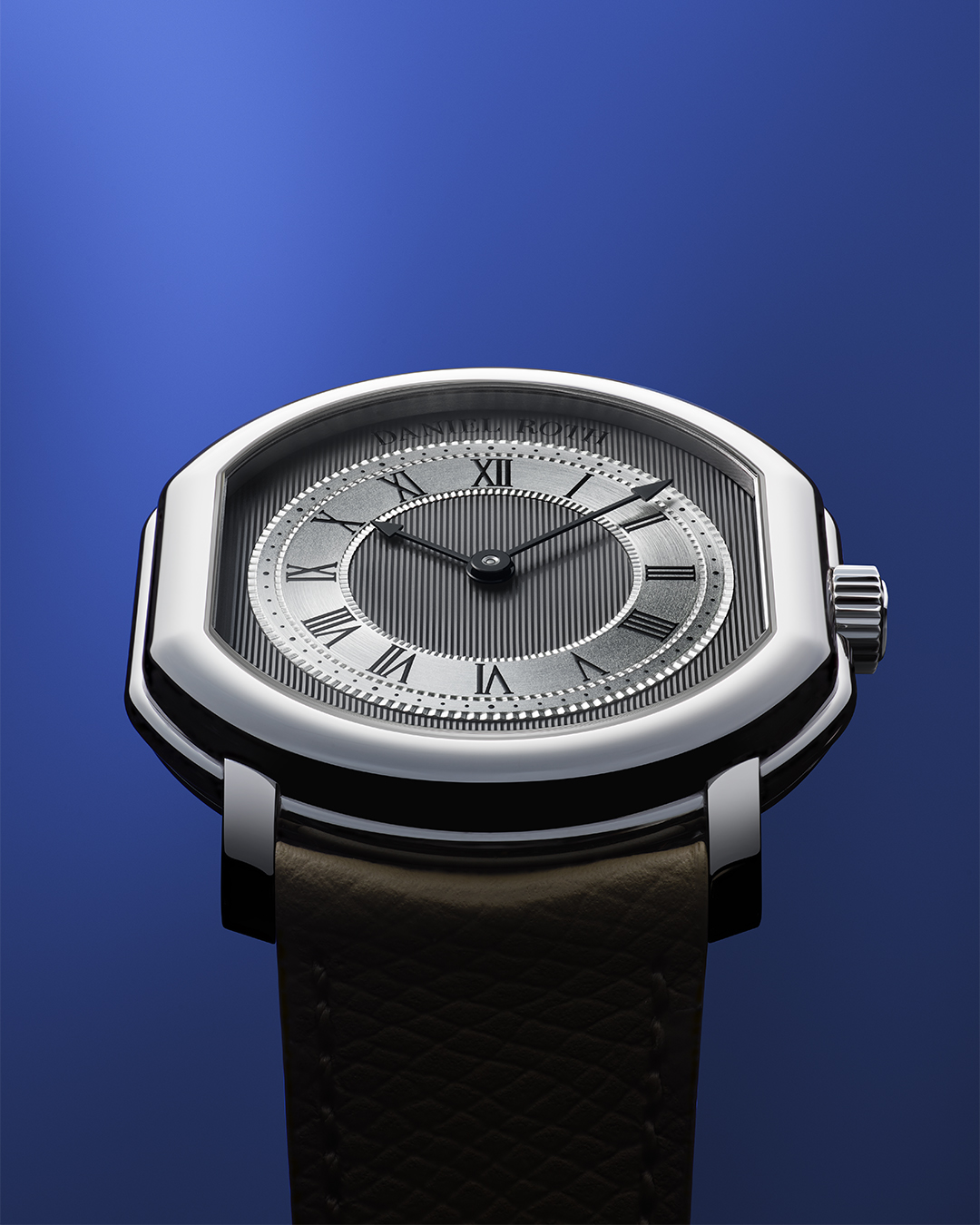
In the refined sphere of independent watchmaking, DANIEL ROTH has introduced a sophisticated new expression of its Extra Plat collection, elevating the rarity of the line while retaining an understated and disciplined elegance. Rooted in the firm belief of its legendary founder that a thin dress watch represents the ultimate epitome of functional elegance, this model is meticulously designed from the ground up to balance modern sophistication with time-honored craft. Cloaked in 950 platinum—a noble metal long synonymous with rarity and traditional savoir-faire—the watch establishes a quiet yet unmistakable presence on the wrist that will immediately resonate with serious connoisseurs.

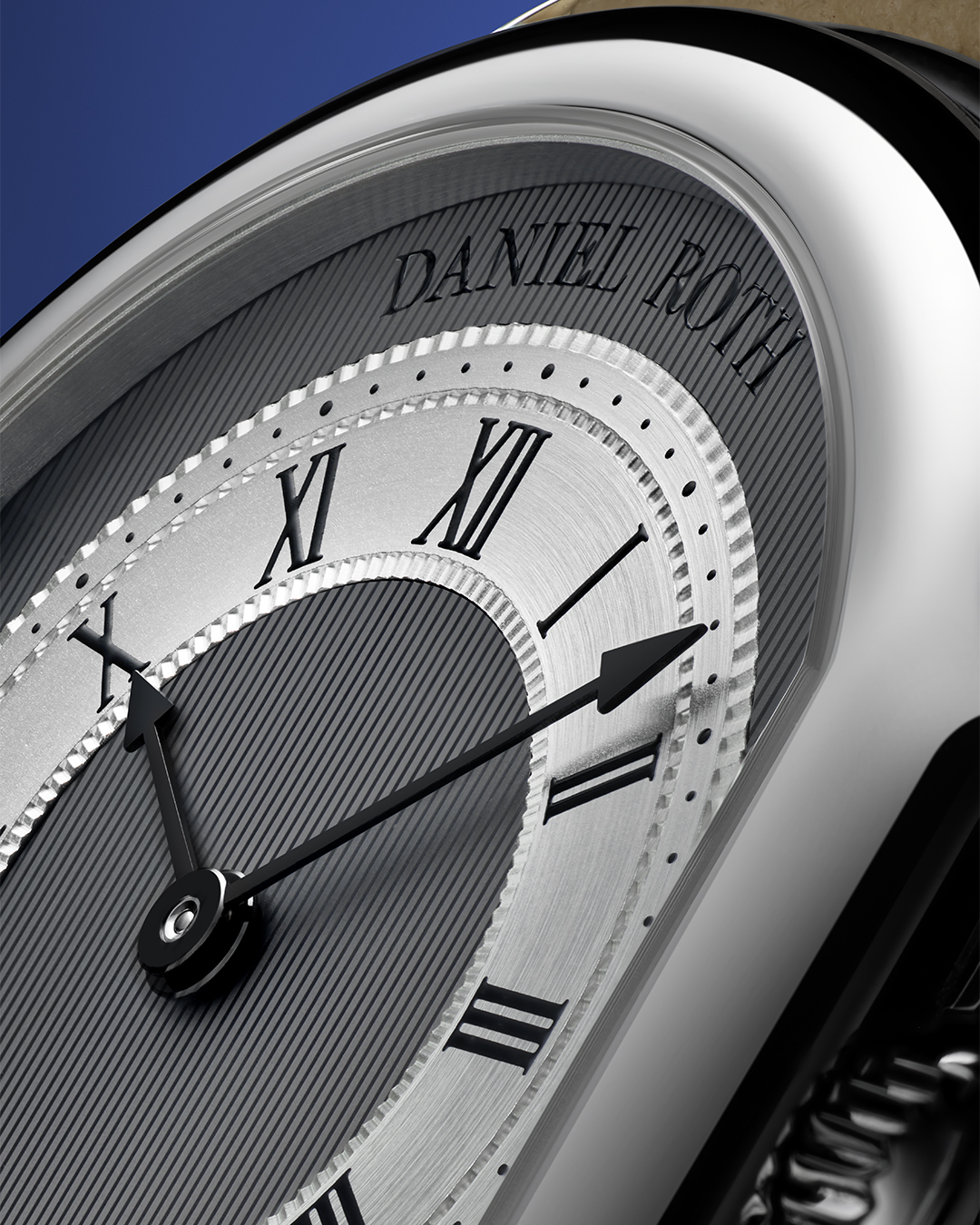
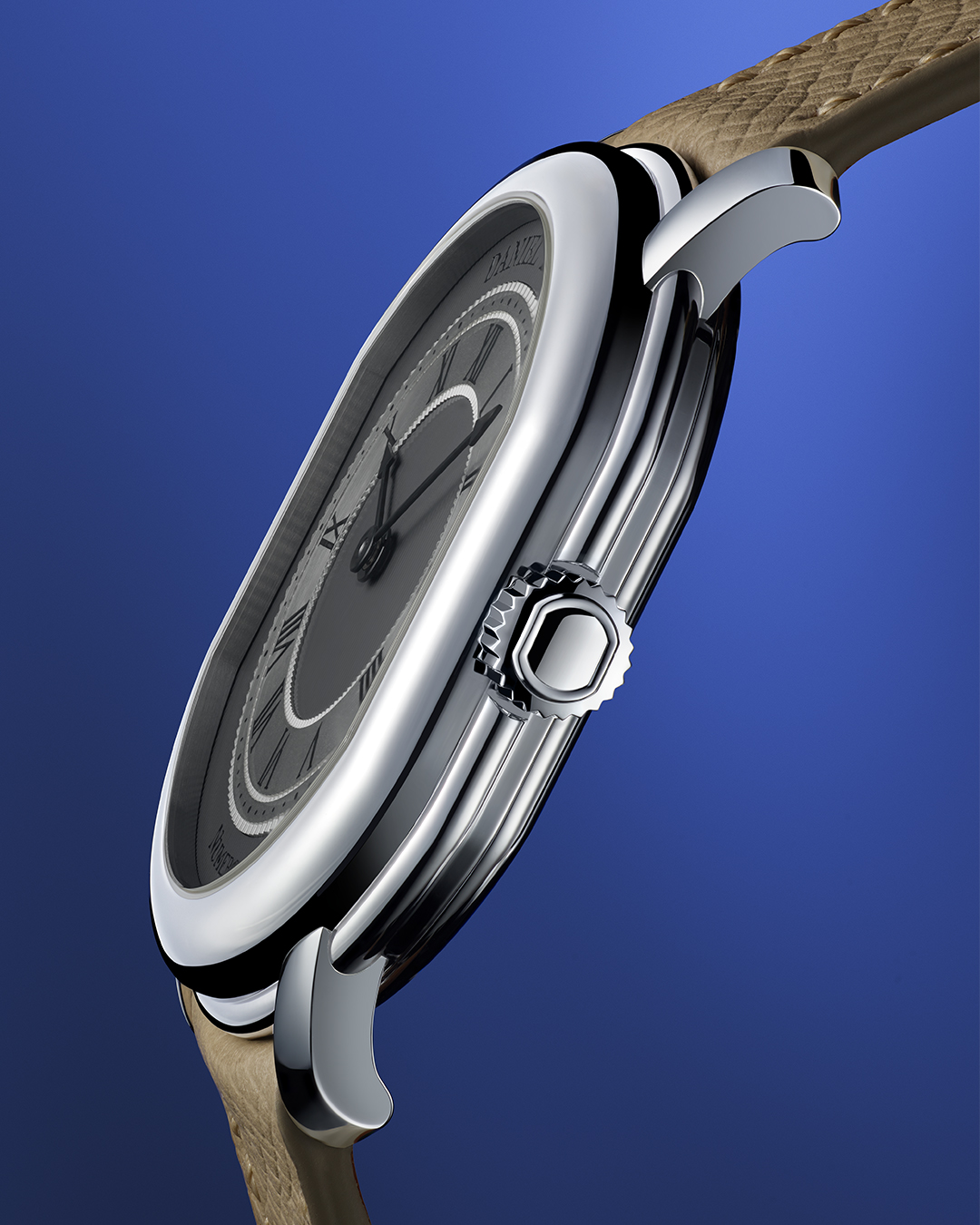
The defining silhouette of this timepiece remains the signature double-ellipse case, an iconic geometry originally created by master watchmaker Daniel Roth to beautifully frame complex horological mechanisms. To complement this distinctive shape, downward-sloping lugs have been elegantly integrated to ensure optimal wrist comfort while providing a handsome architectural contrast against the light-tan calfskin leather strap. The dial base is forged from solid white gold, displaying a mesmerizing pinstripe guilloché texture executed entirely by hand using a traditional rose engine. Each line is individually carved with masterful control over depth and spacing, beautifully bordered by a gold minute disc finished with a classic filet sauté edge and sharp black typography.

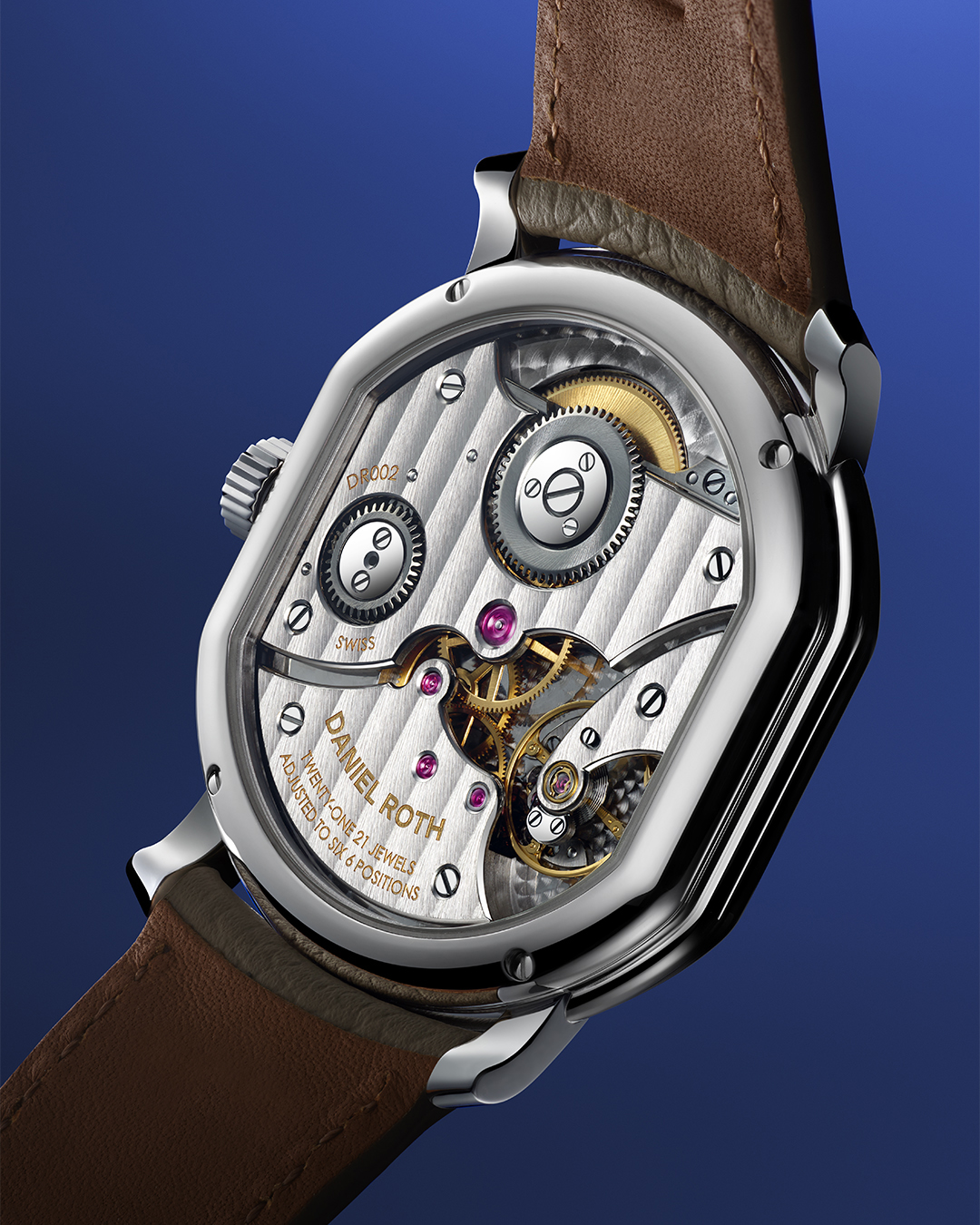
Beneath this stunning facade lies the core of the timepiece: the ultra-thin, hand-wound manufacture Calibre DR002, fully developed and assembled at La Fabrique du Temps Louis Vuitton under the expert guidance of master watchmakers Michel Navas and Enrico Barbasini. Tasked with striking the perfect balance between chronometric precision and a generous power reserve within a slim 3.1 mm structure, the watchmakers increased the movement's frequency to 4 Hz. To sustain this high frequency without sacrificing energy efficiency or structural stability, the calibre incorporates a specially refined balance wheel featuring a variable-inertia geometry and adjustable counterweights.

An open sapphire caseback reveals the true artistic discipline of the manufacture, where technical engineering and aesthetic restraint seamlessly converge. The movement's bridges are decorated with demanding hand-finishing details, most notably the internal angles which are rendered in a rare, rounded bercé form. Requiring at least twice the execution time of a standard flat bevel, this traditional decoration involves polishing a precise curved radius along the edges to create a brilliant, uniform profile. Shaped and hand-polished in-house using a traditional cabron tool, these components reinforce the brand's unwavering commitment to its guiding philosophy: "La Montre Objet d'Art".


View Watch Gallery
Image 1

Image 2
Image 2
Image 2
 
View More
ENDLESS DISCOVERY IN YOUR INBOX
Join our mailing list to receive insider updates on our latest collections, invites to private events, and other personalized offerings.